

Common Bearing Failures and How to Prevent Them in Industrial Applications
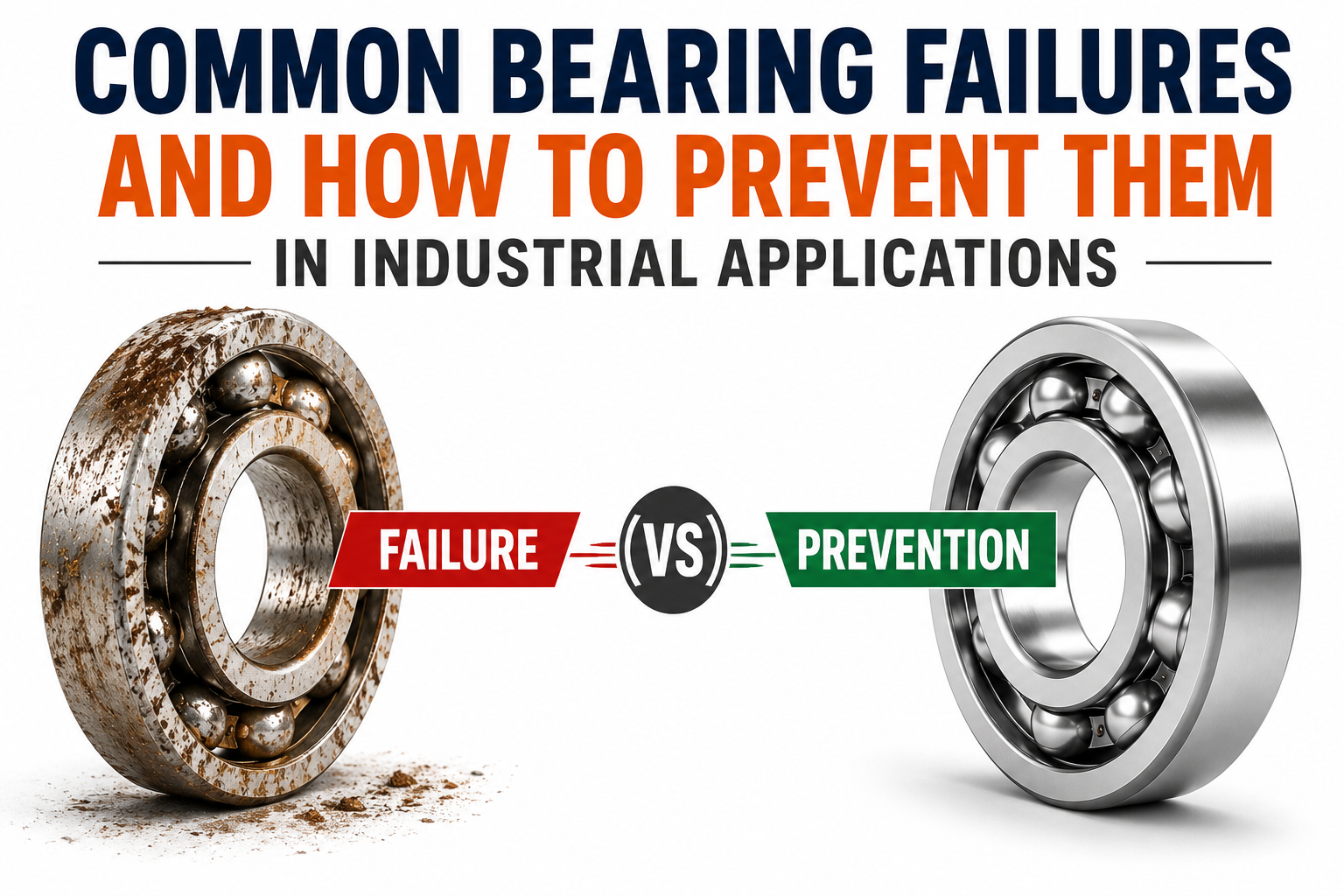
Bearing failures rarely happen without warning. In most industrial systems, performance issues begin gradually through heat generation, lubrication breakdown, contamination, or improper load distribution before eventually leading to machine downtime. Understanding these early signs helps industries reduce maintenance costs, improve equipment reliability, and extend bearing service life.
This guide explains some of the most common bearing failures seen across industrial applications, what causes them, and how proper selection, handling, lubrication, and operating practices can help prevent premature damage in rotating equipment.
Why Bearing Failures Usually Start Long Before the Bearing Stops Working
In many industrial applications, bearing failure is often treated as a sudden event. In reality, most failures develop gradually over time through small operational issues that continue unnoticed until performance drops significantly. Increased vibration, heat buildup, noise, or lubrication breakdown are usually early warning signs that appear well before complete failure occurs.
One of the biggest misconceptions in industrial maintenance is assuming that bearings fail only because of poor quality. In practice, many failures are caused by operating conditions, installation practices, contamination, or improper lubrication rather than manufacturing defects alone. Even a properly selected bearing can fail prematurely if surrounding conditions are not controlled.
Because bearings operate continuously inside rotating systems, even small inefficiencies accumulate over time. What starts as minor surface wear can eventually affect load distribution, alignment, and rotational stability. This is why understanding failure patterns is important not only for maintenance teams but also for procurement and engineering decisions.
How Early Symptoms Are Commonly Ignored
In many facilities, machines continue operating despite small increases in noise or vibration because production schedules take priority over inspection. These early symptoms are often treated as normal operating variations instead of indicators of developing failure.
Over time, this delay in corrective action allows internal damage to progress further. What could have been resolved through lubrication adjustment or alignment correction eventually turns into bearing replacement and unplanned downtime.
Why Preventive Thinking Improves Equipment Reliability
Industries that focus on preventive maintenance usually experience fewer unexpected breakdowns compared to reactive maintenance environments. Monitoring lubrication condition, operating temperature, and vibration patterns helps identify issues before severe damage occurs.
This approach not only extends bearing life but also improves the reliability of surrounding components connected to the rotating system.
Lubrication Failure — One of the Most Common Causes of Premature Bearing Damage
Proper lubrication plays a critical role in separating rolling elements from metal contact surfaces inside a bearing. When lubrication quality degrades or becomes insufficient, friction increases rapidly, leading to heat generation and accelerated wear. Over time, this damages raceways, rolling elements, and cages.
In many industrial applications, lubrication problems are not caused by complete absence of lubricant but by incorrect lubrication practices. Using the wrong viscosity, applying excessive grease, or allowing contamination to enter the lubricant can significantly reduce performance. These issues are especially common in high-speed systems operating continuously.
Lubrication-related failures are often preventable because early signs usually appear before severe damage occurs. Increased operating temperature, discoloration, abnormal noise, or changes in grease consistency are common indicators that lubrication conditions need attention.
How Over-Lubrication Creates Hidden Problems
Many operators assume that adding more grease improves protection. In reality, excessive lubrication can increase internal pressure and generate additional heat inside the bearing.
This excess heat breaks down lubricant properties faster and reduces operating efficiency. In high-speed applications, over-lubrication can become just as damaging as insufficient lubrication.
Contaminated Lubrication Accelerates Wear
Dust, moisture, and metal particles entering the lubricant create abrasive conditions inside the bearing. These contaminants damage rolling surfaces gradually and increase friction during operation.
Without proper sealing and maintenance practices, contamination-related wear becomes difficult to control, especially in industrial environments exposed to dirt and vibration.
Misalignment and Improper Installation Often Reduce Bearing Life Early
Even high-quality bearings can fail prematurely if installation practices are incorrect. Improper mounting methods, excessive force during assembly, or shaft misalignment create uneven load distribution that affects internal rolling elements over time.
In many industrial setups, alignment issues develop gradually due to structural movement, vibration, or operational stress. These small variations may not appear critical initially, but they continuously place additional stress on the bearing during operation.
Improper installation also damages bearing surfaces before the machine even begins operating. Hammering bearings into position, incorrect fitting tools, or contamination during assembly can introduce microscopic damage that later develops into larger operational failures.
Why Shaft Alignment Directly Affects Performance
Bearings are designed to distribute load evenly during rotation. When shafts are misaligned, load concentration shifts unevenly across rolling surfaces, increasing stress and heat generation.
Over time, this leads to premature wear patterns, vibration issues, and reduced operating efficiency throughout the system.
Installation Damage Often Goes Unnoticed Initially
Many installation-related problems do not appear immediately after assembly. Machines may operate normally during early stages before hidden surface damage begins affecting performance later.
Because of this delayed effect, installation practices become one of the most overlooked causes of bearing failure in industrial environments.
Contamination and Environmental Exposure Gradually Destroy Bearing Surfaces
Industrial environments expose bearings to dust, moisture, chemicals, and temperature fluctuations that continuously affect performance. If contaminants enter the bearing assembly, they create abrasive contact between rolling elements and raceways, accelerating wear over time.
Moisture exposure is particularly damaging because it promotes corrosion inside bearing surfaces. Even minor corrosion affects smooth rotation and increases friction during operation. In systems operating continuously, these small imperfections expand gradually into larger failures.
Environmental exposure becomes even more severe in industries where machines operate in dirty or humid conditions. Without proper sealing and maintenance practices, contamination eventually reduces both efficiency and bearing lifespan.
Why Cleanliness During Maintenance Matters
Contamination often enters bearings during maintenance rather than during operation itself. Improper storage, dirty tools, or open exposure during servicing introduce particles directly into sensitive surfaces.
Maintaining cleanliness during installation and lubrication procedures significantly reduces contamination-related damage.
How Corrosion Leads to Surface Fatigue
When moisture reaches bearing surfaces, corrosion begins forming small pits on raceways and rolling elements. These imperfections interrupt smooth motion and increase localized stress during rotation.
Over time, this develops into surface fatigue that eventually leads to vibration, noise, and operational instability.
Electrical Damage and Excessive Heat in Modern Industrial Systems
In many electrically driven systems, stray electrical currents can pass through bearings and damage internal surfaces. This commonly occurs in motors, variable frequency drive systems, and improperly grounded equipment.
Electrical discharge creates microscopic burn marks on raceways that gradually increase roughness and vibration. Over time, these damaged surfaces generate additional friction and heat, accelerating wear throughout the bearing assembly.
Heat itself also becomes a major issue when operating conditions exceed recommended limits. Excessive temperature affects lubricant performance, material stability, and internal clearances, eventually reducing bearing reliability.
How Electrical Current Damages Bearing Surfaces
Electrical current passing through rolling elements creates localized melting at contact points. Although microscopic initially, these marks gradually expand and create uneven surfaces inside the bearing.
This increases noise and vibration while reducing smooth rotational performance.
Excessive Temperature Weakens Lubrication Stability
As operating temperatures rise, lubricant viscosity changes and protective film strength decreases. This increases metal-to-metal contact and accelerates wear.
Without proper thermal control, excessive heat eventually affects both bearing performance and surrounding machine components.
How Proper Bearing Selection Helps Prevent Long-Term Failures
Many bearing failures begin long before operation due to incorrect selection for the intended application. Choosing a bearing based only on dimensions without considering load direction, operating speed, environmental exposure, or alignment conditions often leads to reduced service life.
Different applications introduce different challenges. Systems operating under combined loads, high radial stress, or alignment variation require bearing designs specifically suited for those conditions. Using a general-purpose bearing in a specialized application usually creates gradual inefficiencies that eventually result in failure.
This is why bearing selection should always be tied to actual operating conditions rather than catalog compatibility alone. Matching the bearing design to application requirements improves reliability and reduces maintenance frequency over time.
Why Load Conditions Must Be Evaluated Properly
Bearings experience different force patterns depending on machine operation. Ignoring axial loads, shock loads, or continuous stress cycles can result in incorrect selection.
Understanding these load conditions helps improve long-term performance and operational stability.
Application-Based Selection Improves Reliability
Bearings selected according to real operating conditions usually perform more consistently over time. This reduces unexpected downtime and helps improve overall machine efficiency.
Application-focused selection also supports better maintenance planning and lifecycle management.
Reducing Bearing Failures Requires More Than Replacement Alone
Replacing damaged bearings without addressing the root cause often leads to repeated failures. In many industrial systems, the real issue lies in lubrication practices, alignment conditions, contamination exposure, or operating overload rather than the bearing itself.
Long-term reliability improves when industries treat bearing performance as part of a complete rotating system rather than an isolated component. Monitoring vibration, temperature, lubrication quality, and alignment conditions helps identify problems before severe damage develops.
Preventing failures is ultimately about consistency — consistent maintenance, correct handling, proper installation, and selecting bearings that align with actual application demands. When these factors are managed correctly, bearing life improves significantly, reducing downtime and improving overall equipment performance.